


Reading time
~33 min
Summary of the Full Version of the Book
How Moscow Incited Armenians Against Turks and Doomed an Entire Civilization to “Disappearance”

This is a summary of the full version of the book “The Perished Civilization—an Unnoticed Catastrophe”. It outlines all of the key points presented herein. The facts they are based on are fully supported by documents. The book provides exhaustive evidence, primarily from Armenian, Russian, and French sources (Azerbaijani and Turkish sources were not used).

In 2025, the leaders of Azerbaijan and Armenia signed a peace declaration in Washington. This historic event occurred amid an ongoing escalation of tensions between Yerevan and Baku, on the one hand, and Moscow, on the other hand. Many mass media outlets interpreted this as twofold: Russia’s final loss of influence over South Caucasus and the end of the 120-year confrontation between the Armenians and the Azerbaijanis. The more so because the Karabakh issue was fully resolved in 2020–2023. President Aliyev restored Azerbaijan’s sovereignty over this region. Prime Minister Pashinyan renounced any claims to it. This became nearly the main accusation made by pro-Russian radical nationalists against the head of the Armenian government.
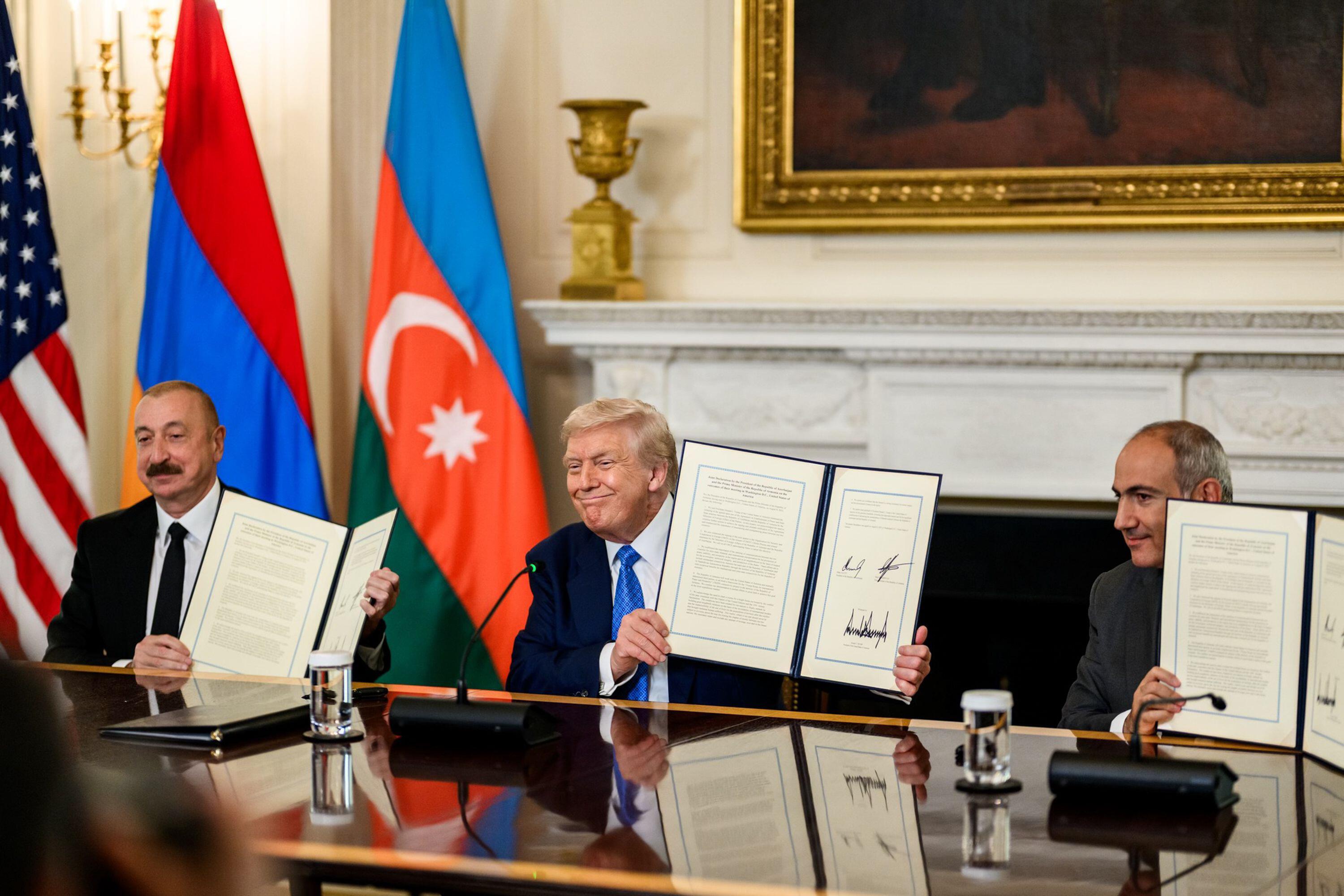
US President Donald Trump, Azerbaijani President Ilham Aliyev, and Armenian Prime Minister Nikol Pashinyan present the signed agreements during the historic peace summit. White House, August 8, 2025.
However, despite some columnists' anticipation of an idyllic era in relations between these two nations, another dark chapter of their shared past has remained forgotten— the relatively recent “perishing” of an entire civilization in the Caucasus. By historical standards, this happened within a very short period of time—160 years (1827–1988). The processes behind this “disappearance” involved three violent expulsions totaling over 350,000 people, a systemic deportation of about 150,000 people, and the extermination of over 250,000 people within two and a half years.[1]
In this context, it is appropriate to quote Yuri Pirumian, an Armenian historian, a grandson of one of the key military figures in the First Republic of Armenia (1918–1920), who made the following point regarding the prospects for normalization of relations between Armenia and Turkey,
In light of the Catastrophe of the “perished” civilization, this language fully applies to the prospects for the final reconciliation of the two neighboring peoples of Caucasus. Moreover, there are remaining representatives of the “perished” civilization still alive in Azerbaijan today. They are still haunted by the memories of the terrible suffering they went through, the loss of their native lands, the devastated households, and the desecrated graves of their ancestors.
Samaya Huseynova who was born in 1954 in the village of Kursali (now Arjhovit) in northern Armenia and lived there until 1988, recalls:[3]
“Armenians wiped out, exterminated our people there.”
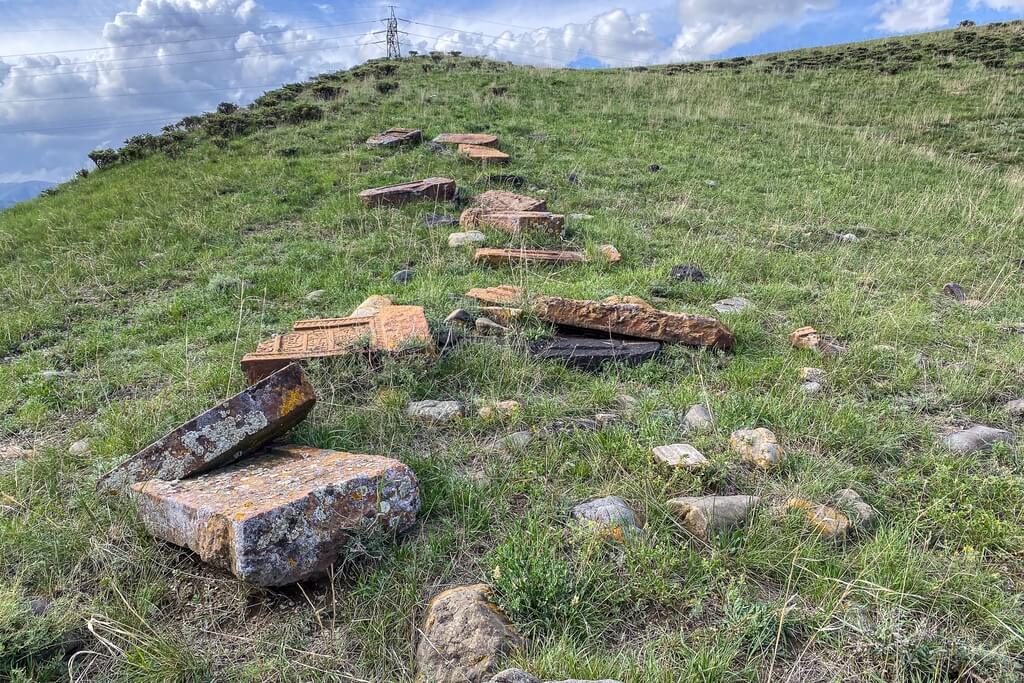
Ruins of a Muslim cemetery in the village of Kursali (now Arjhovit). Photo taken during fieldwork in Armenia.
Asaf Najafov, who was born in 1967 in the village of Narimanlu/Guseyn-Kuli-Agalu (now Shatvan) in eastern Armenia and lived there until 1988, recalls:[4]
“Not only our grandfathers but also our great-grandfathers and even great-great-grandfathers are buried there. Knowing that we cannot visit their graves and unburden our hearts there is particularly painful. It breaks all of our hearts. We cannot even ask them to forgive us for being forced to leave them there. It’s very hard for me to talk about this. As you know, the situation created for us on our native lands, the lands of our fathers and grandfathers was tragic. They constantly interfered in our lives, which made it impossible for us to live in peace and thrive…
The villages in Göyçə mahalı (the Lake Sevan district) [used to] have Turkic, Azerbaijani names. First, they started changing those names. Then, gradually appropriating our territories, they began to force us out, while constantly showing aggression, and by 1988, they finally drove us from our native lands, lands of our fathers and grandfathers.”
Sulduz Khalilov, who was born in 1965 in the village of Abilkend (now Noramarg) in southern Armenia and lived there until 1988, recalls:[5]
“We had to leave behind everything we could build in 50 years. Not even 50, everything our grandfathers left us, even our very homeland. We did them no harm… We had lived there for millennia; after all, that land did not belong to them.”
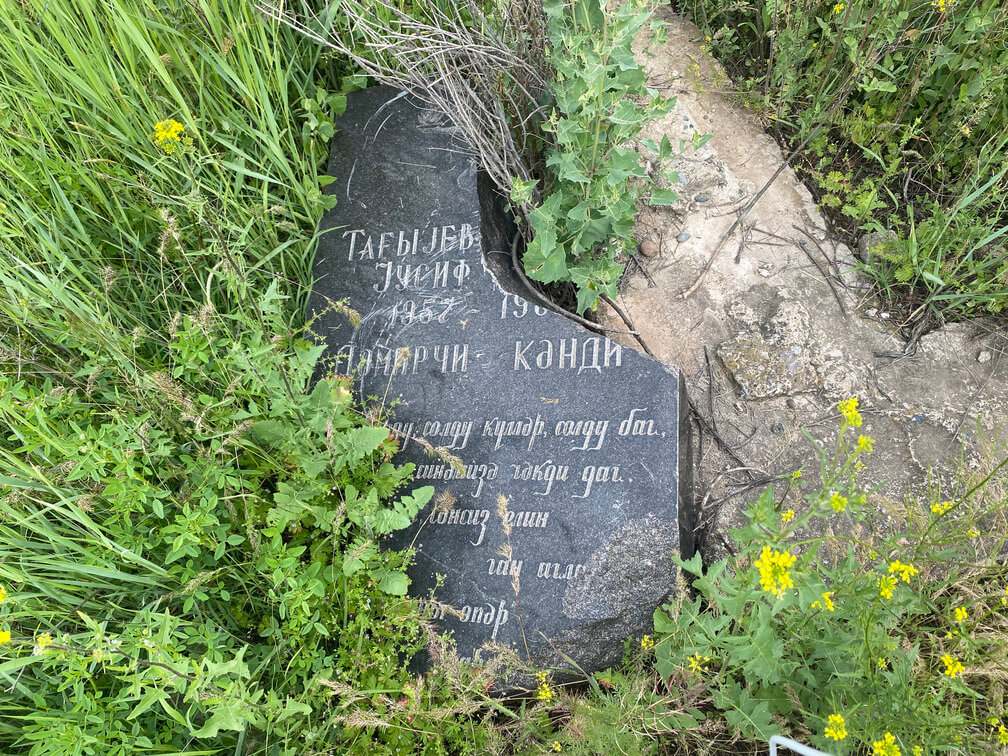
Azerbaijani tombstone with an inscription in Azerbaijani (Cyrillic) in the village of Abilkend (now Noramarg). Photo taken during fieldwork in Armenia.
Sanubar Mamishova, who was born in 1952 in the village of Saral (now Nor Khachakap) in northern Armenia and lived there until 1988, recalls:[6]
“I remember everything. It feels as though I have left the village of Saral just today. We had good neighbours and a good life. We had a beautiful and very large garden, and my father had cattle… My mother’s grave is still there… We couldn't take it back.”
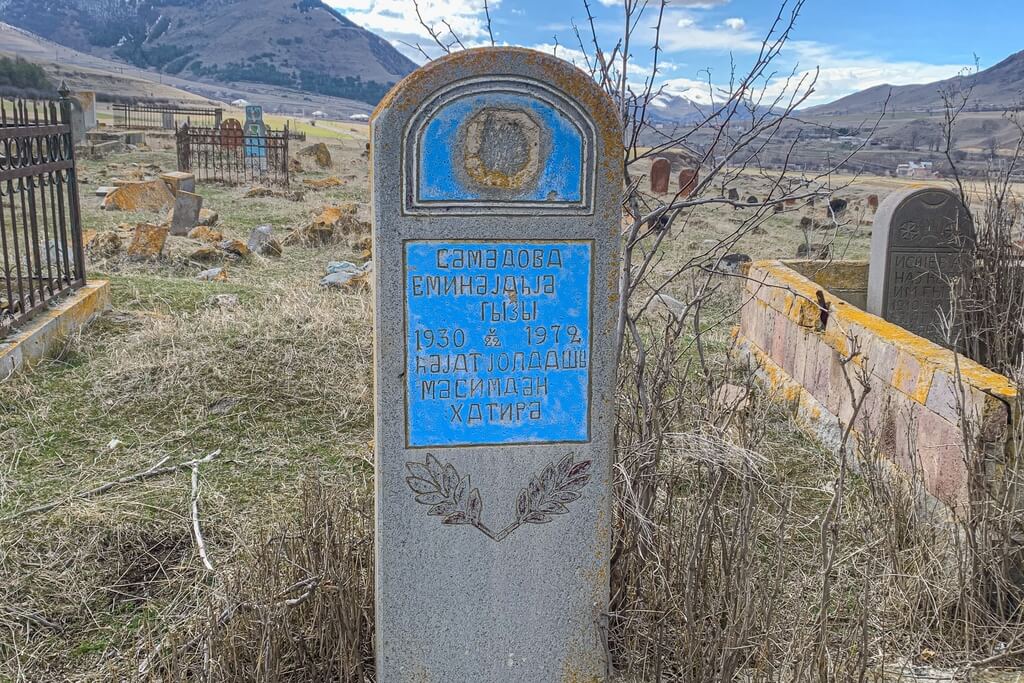
Abandoned Muslim cemetery in the village of Saral (now Nor Khachakap). Photo taken during fieldwork in Armenia.
Aziz Agadjanov, who was born in 1976 in the village of Babajan-Darasi (now Tsapatagh) in eastern Armenia and lived there until 1988, recalls:[7]
“Believe me, I saw our village and our home even in my dreams. I saw it in my dreams hoping that we would still return to our village. All of our belongings were left there. I had pigeons that I loved so much but I could not take even them with me. So, they remained on the roof. We thought we would return. We believed in it…”
Targul Orudjeva, who was born in 1972 in the village of Zarkend/Zarzibil in eastern Armenia and lived there until 1988, recalls:[8]
“[After the expulsion in 1988] We cried the whole day because we wanted to be in our village, we wanted to go home…”
Asaf Najafov, who was born in 1967 in the village of Narimanlu/Guseyn-Kuli-Agalu (now Shatvan) in eastern Armenia and lived there until 1988, recalls:[9]
“We were forced to leave our homeland, and we are still hurt by that parting.”
Tamila Jabbarova, who was born in 1959 in the village of Aghbulagh (now Aghberk) in eastern Armenia and lived there until 1988, recalls:[10]
“We had to abandon almost everything we had—our homeland, our home. We still see Armenia in our dreams. Although 35 years have already passed. We still dream of Armenia.”
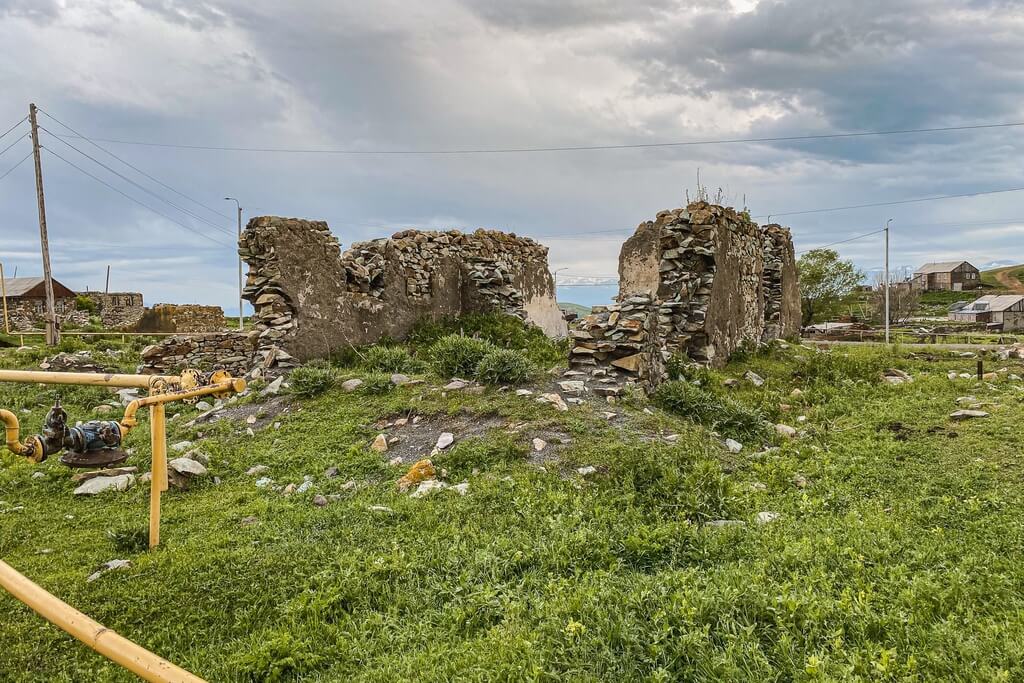
Ruined house in the village of Aghbulagh (now Aghberk). Photo taken during fieldwork in Armenia.
Mahbuba Safarova, who was born in 1963 in the village of Kavshuk/Govshut (now Hermon) in southern Armenia and lived there until 1988, recalls:[11]
“I constantly see our village in my dreams; I see the mountains where I used to walk.”
At the beginning of last century, the present-day capital of Armenia, then called Erivan, had a predominantly Turkic population. The same was true for the northeastern and southeastern regions. For instance, in 1915, the Turkic population constituted 54% of all those living in Zangezur. In the Erivan region, the Turkic residents made up 51% of the population (almost 62,000 people). However, just seven years later, in 1922, over 56,000 Turkic residents “vanished” from this district, and only 5,442 remained. In Erivan itself, there were about 20,000 Turkic residents in 1918, and seven years later just over 5,000 of them remained. All others “vanished” as well. Overall, in 1926, Turkic residents accounted for only 8.8% of the total population of Armenia, compared to more than 80% exactly 100 years earlier.
How did this happen? When did the process of such rapid “vanishing” of the Turkic residents of Erivan and Zangezur, as well as the hostility of Armenians toward this ethnic group throughout the region, actually begin?
Azerbaijani historians identify the mass resettlement of Armenians from Persia and Turkey to South Caucasus, which was carried out by the Russian authorities in 1828–1830, as the “starting point.” Their Armenian peers trace the beginning of the conflict to the interethnic clashes of 1905. However, both approaches only focus on the consequences, while overlooking the actual root causes of the confrontation. It was the Catastrophe of the Turkic civilization of Erivan and Zangezur that we can consider the most tragic point in the conflict.
When and how did it all really begin then? For many, the true answer may seem unexpected.
Turkic Islam and the Unexpected Rise of Moscow
Place: the territory of what is now the Astrakhan Oblast in southwestern Russia.
Time: 1313
As a result of a brief struggle for power, a 30-year-old great-grandson of Genghis Khan became the ruler of a huge empire. It went down in history as the Golden Horde, a name derived from the color of the ruler’s tent. The central figure of our narration was known as Uzbeg. He ruled over vast territories. Describing them in terms of today’s borders, they extended from Kazakhstan and Uzbekistan in the east to Ukraine, Moldova, and Southern Romania in the west, and from Siberia in the north to the Caucasus in the south.
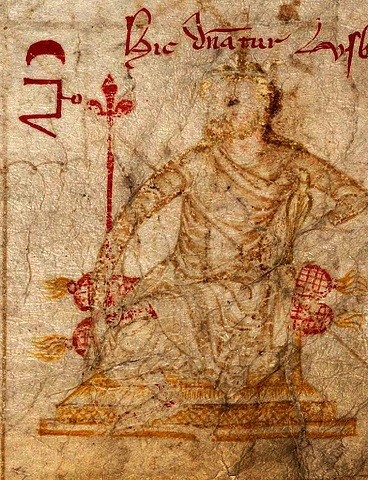
Portrait of Uzbeg Khan (1339) by A. Dalorto
Today, only historians studying medieval Eurasia know the name of the great Uzbeg Khan. It means nothing to the general public. This is undeservedly so. The consequences of his policies still affect the fates of millions of people in Central Asia, the Caucasus, Russia, Ukraine, and even the European Union to this day. Two innovations introduced by this Khan had a particularly long-lasting effect.
First, Islam became the dominant religion, and the Turkic language became dominant as well in the Golden Horde. People who lived on the lands of today’s Uzbekistan, Kazakhstan, Azerbaijan, and Tatarstan built a rich Turkic-Muslim culture during the 45-year reign of Uzbeg and, later, his son. It strengthened the bonds between the major Turkic-speaking peoples of Eurasia. The fact that Uzbeg’s empire united the ancestors of Azerbaijanis, Kazakhs, Uzbeks, Turkmens, and Bashkirs, as well as Crimean, Kazan, and Siberian Tatars, catalyzed its expansion. There were no other such Turkic powers. It is Uzbeg’s legacy that the present-day Organization of Turkic States (OTS), which Moscow propagandists regard as an alliance potentially threatening to Russia, is based on.
The second innovation the Khan introduced had an even greater impact. In addition to the regions already indicated, the present-day western regions of Russia were subordinate to him. In historiography, these lands are referred to as North-Eastern Rus'. It was fragmented into mutually hostile semi-independent territorial and political formations called “principalities”. The Principality of Moscow was one of the smallest and least significant of them.
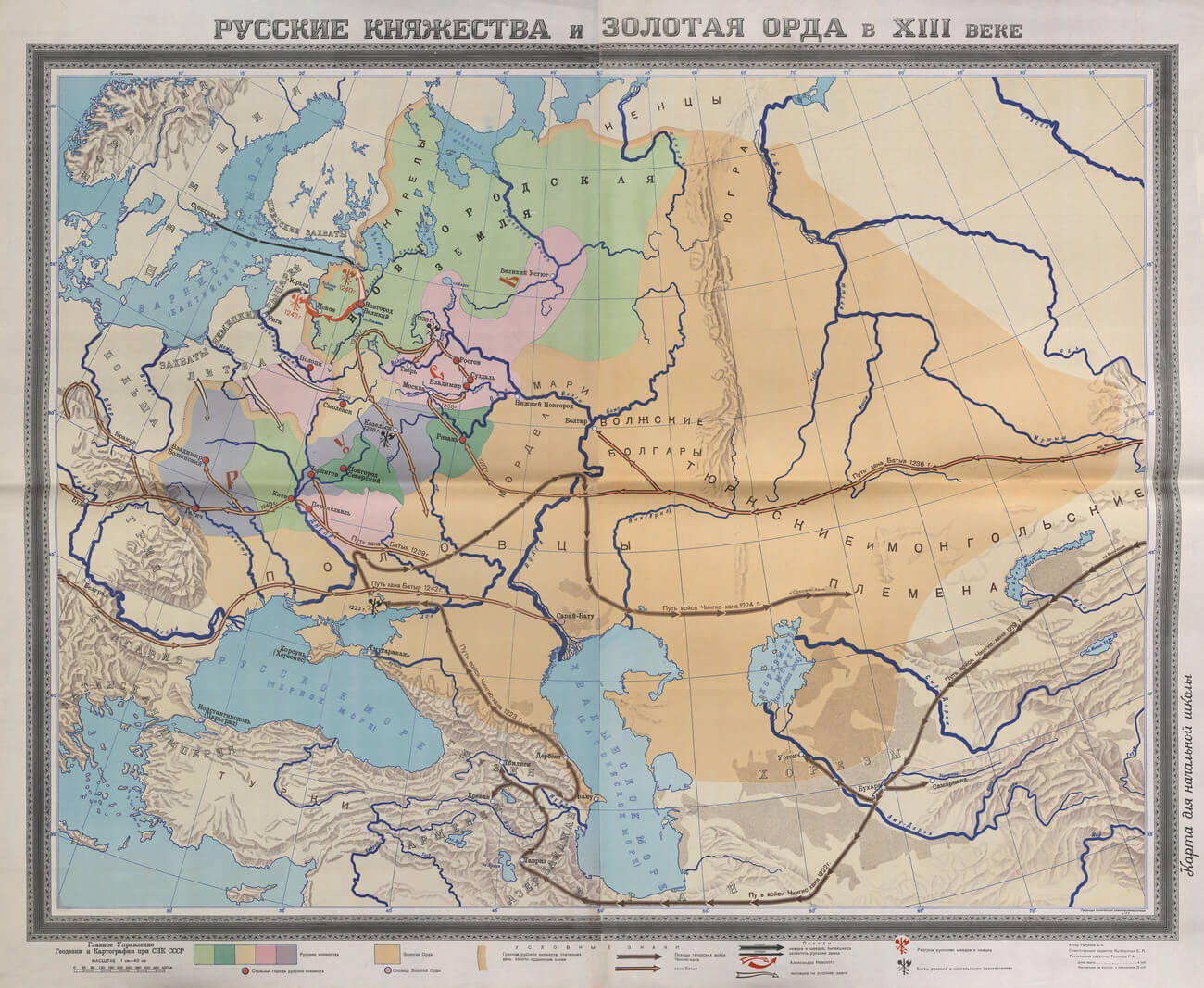
Map of Russian Principalities and the Golden Horde in the 13th Century, by B.A. Rybakov.
Until the 14th century, Moscow, built according to Polish architectural designs by craftsmen from what is now Ukraine, [12] played no significant role in North-Eastern Rus'.[13] Unlike Kyiv, it was neither a major city in the early Rus' State[14] nor a clerical center.[15] Its lands were poor and sparsely populated. Nothing suggested the rapid rise.
But among all the Russian princes, Uzbeg had favored the rulers of Moscow. He provided them with an advantage over their more powerful rivals. At the same time, the Khan took measures to weaken the other principalities. Thanks to his patronage and the active involvement of the Tatars, Moscow adopted the Golden Horde’s military technologies, cultural achievements, and methods of governance that were progressive by the standards of that time. This is how it surged ahead in the competition for dominance in North-Eastern Rus'. Both the area under its control and its revenues increased significantly. Residents of other principalities migrated to the lands controlled by Moscow. By the end of the life of Uzbeg’s son, who continued his father’s policy, Moscow had emerged as a major power.
In those days, it was in many ways a city with an “Eastern” character. Tatars lived in the Kremlin. The residents’ artistic tastes were often shaped by Islamic canons. In Moscow, coins were minted with inscriptions in the Arabic script and names of khans on them, and prayers for their health were said in local churches. Icons, helmets, and armor were adorned with inscriptions invoking the name of “Allah”.
Moscow’s Ideology of Expansion
Although several generations of the Moscow princes viewed the period of Uzbeg and his son’s rule as “exemplary” (they minted coins based on their patterns), the Moscow state was shaping its own vision, opposing it to the legacy of the khans. While the khans were promoting Islam within the Golden Horde, Moscow’s ideologists were constructing a hostile image of Turkic Islam. When their empire started to collapse after Uzbeg’s son died in the second half of the 14th century, Moscow would portray the Tatars in a completely negative light as enemies of Orthodox Christianity. The struggle against Muslims was proclaimed a pious deed. The Grand Prince of Moscow was declared its leader. This is how Moscow’s leading role in the confrontation with the weakening Golden Horde and the consolidation of Russian lands was justified. They were now considered in a broader context than that of North-Eastern Rus'. Moscow’s ambitions spread to today’s Ukraine, Belarus, Moldova, and even Bulgaria. In turn, the antithesis of “true-believing Christians” led by Moscow versus the “infidel pagans of the Tatar land” ultimately served to legitimize Moscow’s advance into Turkic-Muslim regions. Since all Turkic peoples of Eurasia were called “Tatars” since the days of Genghis Khan, the scale of potential expansion “in the name of the Orthodox faith” became indefinitely broad: the Volga region, Siberia, Central Asia, and the Caucasus. In the 1370s, fifteen years after the death of Uzbeg’s son, Moscow launched its first offensive into the Turkic lands.
When the Golden Horde eventually split in the 1460s, the name “Russia” began to spread in the Russian language instead of the previously used “Rus'.” At the same time, two more events of great importance happened—namely, the fall of Byzantium’s capital to the Ottomans in 1453, and the favorable outcome for the Muscovites in the confrontation with one of the Tatar claimants to Uzbeg’s legacy in 1480. Against this background, Moscow’s ideologists began to nurture the idea of the messianic role of their “God-blessed city.” Now, Moscow was envisioned as the center of both the Russian lands and the entire Orthodox world. For the first time, one of the authoritative figures of the Russian Church outlined the prospect of absorbing the fragments of the Golden Horde as follows: the Lord “will bring them under our dominion as well”.
Muscovy, as Europeans began to call this growing principality at that time, was becoming a dominant force in Eastern Eurasia, replacing Uzbeg’s collapsed empire in this role. Starting from the 1460s–1480s, Moscow’s efforts to subjugate one of the main successors of the Golden Horde, the Kazan Khanate, became systematic.
The Early Stages of Imperial Expansion and the “Armenian Card”
Eventually, a young ruler who went down in history as Ivan the Terrible coped with this task brilliantly. But before that, in 1547, he proclaimed himself the first Tsar of Muscovy. At that time, the status of a tsar (or its equivalent) was mainly held by khans of Turkic states that emerged on the ruins of the Golden Horde, along with the sultan of the Ottoman empire and the Persian shah. Having bestowed such a meaningful title upon himself, Ivan instantly “elevated” himself above the rulers of nearly all of Europe, identified who his rivals in the East would be, and asserted his claim to the Golden Horde’s legacy.
In 1549, the tsar made the first attempt to capture the capital of the Kazan Khanate. From that moment, Moscow’s expansion into the Muslim world became openly imperialistic. Previously, Russian campaigns against Turkic lands generally pursued the aim of expanding and securing political influence. Henceforth, annexation of territories became the priority.
In 1552, Kazan, a major Islamic center, was captured. Ivan the Terrible reported that 190,000 “Kazan people were slain or injured”. The Tsar and his close circle portrayed this war as religious. Their victory was presented as the triumph of Orthodoxy over Islam. Four years later, Russians occupied Astrakhan. It was the capital of another Turkic khanate and gravitated toward the Caucasus. This city became the base for Moscow’s expansion into the Caspian and Caucasian directions.
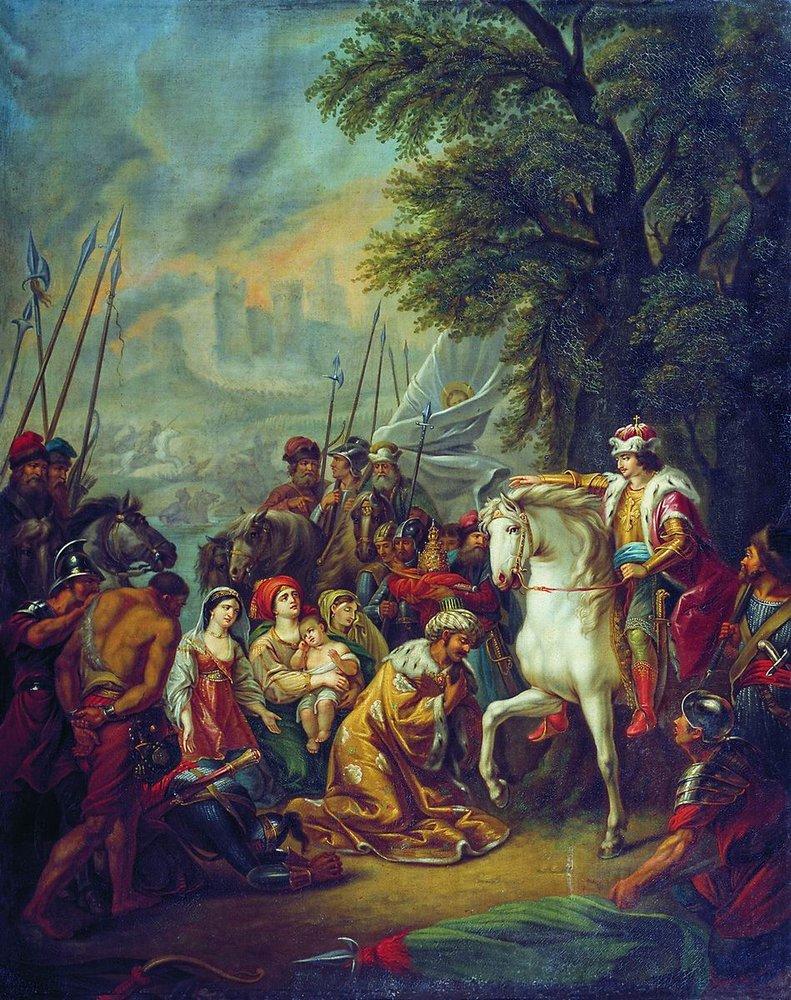
Capture of Kazan by Ivan the Terrible in 1552 by, G. Ugryumov
In both cases, members of Armenian colonies in Kazan and Astrakhan helped Muscovy on the basis of their common faith. Ivan the Terrible appreciated the support from the Armenians. According to a Russian chronicler, the tsar “bestowed great kindness on them.”. Thus, the outlines of the future strategy of using the Armenians for Russia’s advance into the Muslim East began to take shape.
In the second half of the 16th century, the religious concept behind Ivan the Terrible’s expansion was extended to the Caucasus. Assistance to the Georgian tsars and the first Russian invasions of Dagestan were justified by the desire to support fellow believers and to further strengthen Orthodoxy. Muscovy’s envoys convinced the Georgian tsar that their monarch’s objective was “to liberate Christians and defeat Muslims.”.
A Project to Reshape the Demographics of the Caucasus
A new phase of expansion began in 1682. Peter the First, also known as Peter the Great, became tsar. He modernized the army and the state apparatus. He transformed Muscovy into the Russian Empire. The young, ambitious monarch built upon the groundwork in the eastern policy laid by Ivan the Terrible. Peter made the first attempt to conquer the Eastern Caucasus and entered into direct confrontation with Turkey. Since then, the “protection” of eastern Christians became the pretext and justification for Russian expansion (as was also the case in 2022 with the “protection” of Ukraine’s Russian-speaking population). He set out the main principles of a strategy for turning Armenians into a “fifth column” for Russia in the Muslim East for centuries to come.
To convert the Persian Armenians into a “fifth column”, Peter declared his patronage of them. He developed his main “know-how” in 1722–1724. It was a grandiose project to rearrange the ethnodemographic map of the eastern part of South Caucasus. Peter planned to accomplish this through partial deportation of Muslims and mass resettlement of Armenians from Anatolia. It was expected that Turkic and Shia Muslims conquered by force would remain hostile to Russia and would align themselves with Persia, their brothers in faith, and Turkey, their ethnic kin. An order was given to reduce their numbers and create a large Christian community in the eastern part of South Caucasus. Russian colonization was not considered an option at the time because the empire’s European regions were too remote, peasants were bound to landowners (due to serfdom), and Slavs were unfamiliar with the climate in South Caucasus. The Armenians living in the adjacent areas of Persia and Turkey proved to be the only suitable demographic reserve for Peter’s plan. Subsequent Russian monarchs and Soviet leaders zealously realized this intention. This was especially true for Stalin, who saw himself as the successor of Ivan the Terrible and Peter the Great.
In 1783, Russia eliminated the last Turkic state that was a successor of the Golden Horde—the Crimean Khanate. After that, preparations for the subjugation of South Caucasus began. Against this background, a model for involving and offering material incentives to Armenian resettlers from Persia and Turkey was developed. It was tested in the annexed Crimea and the present-day lands of Eastern Ukraine. This is how the authorities increased the pro-Russian population there.

“…Catherine the Great grants extensive benefits and advantages to the Armenian resettlers. Thus, every success of Russian arms against Turkey or Persia is marked by a new influx of the Armenians into Russia, who are bestowed with favors and privileges”, an Armenian public figure from southern Russia observed later.
In 1801–1804, the Russians consolidated their authority in Georgia. Using it as their base, they occupied the entire region by the end of 1827. During the 275 years since Ivan the Terrible’s victorious campaign against Kazan, the Russians captured 14 Turkic state formations, including 10 in the Caucasus. Throughout that period, the expansion of Russia in the Muslim East was largely limited to the subjugation of the territories previously controlled by Uzbeg Khan and his son. The southernmost point of their conquests in the eastern Caucasus was Nakhchivan. The Russians seized it in 1827. About 75% of the former territories of the Golden Horde had already been taken over by the Russian Empire.
After the elimination of the Turkic-Muslim khanates of South Caucasus, the colonial authorities began implementing Peter’s plan aimed at altering the ethnodemographic map of the region. From 1828 to 1830, between 93,000 and 140,000 Armenians were resettled here from Persia and Turkey, according to various estimates.
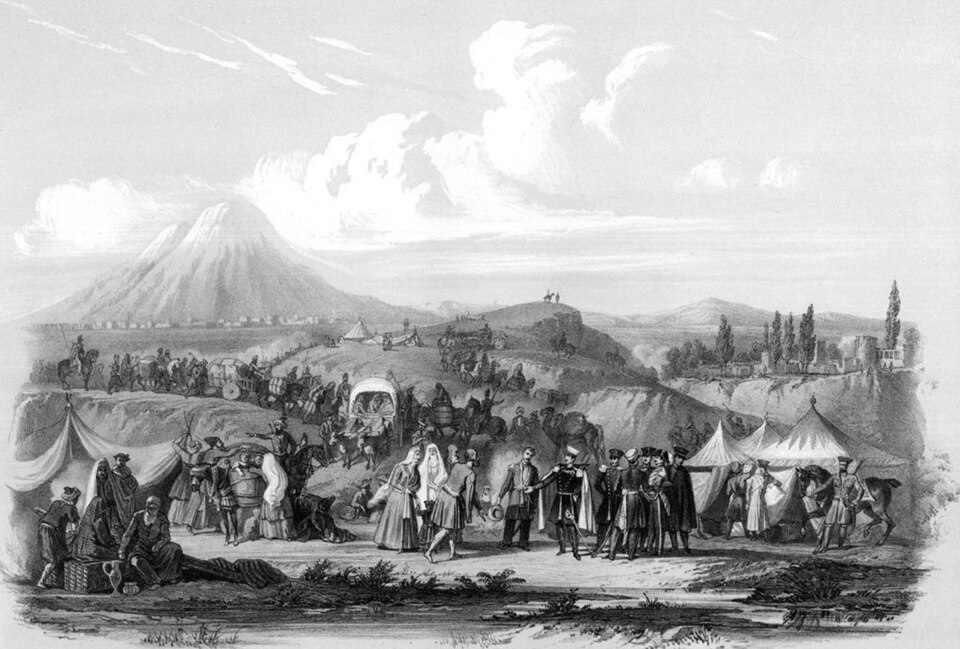
Resettlement of Armenians in 1828, by V. Moshkov.
The authorities settled the largest number of migrants—over 45,000—in Erivan province, the region of South Caucasus from which thousands of Turkic residents had fled during the occupation. It was now the southernmost point of the Russian Empire. Special significance was attached to it. It was seen as both a defensive frontier at the juncture of the borders of Persia and Turkey and a springboard for expansion in Anatolia and the Middle East.
Prior to the occupation, Turkic peoples comprised more than 80% of the population of Erivan province. The new authorities encouraged their expulsion to Persia and Turkey in every possible way. On the other hand, Armenian migrants were given privileges and better lands. In addition, the colonial administration promoted integration of the Armenians into the administrative apparatus, while the Turkic population was systematically discriminated against.
Thus, the Russians established firm control over this area. In 1849, it was merged with the lands of the former Nakhchivan khanate and transformed into the Erivan Governorate. Very soon, in the 1850s, it became a springboard for advancing deep into Turkey. However, it was only after the next war of 1877–1878 that Russia was able to annex the “core” Turkish territories.
The Creation of Armenian Nationalism
Before the 1877–1878 war, Armenians dominated in the economy of the Ottoman Empire. They held high positions in the state apparatus, including as ministers. However, their ethnic kin in Russia tried to turn Armenians of the Ottoman empire against the Ottomans. First, this served the interests of Russian expansion in the Muslim East. Second, since the times of Peter the Great, the Russian Armenians sought to participate in the eastern policy of their new homeland. This elevated their status and position in society. Before and during the 1877–1878 war, they called on their ethnic kin in Turkey to support the invasion. The impact of the propaganda was strengthened by the fact that the Russian Armenians held command positions in the troops on the Turkish front. Under the influence of members of their community in Russia, the Armenians living in the border regions of Anatolia offered their assistance to the occupiers.
When Turkey suffered a devastating defeat, Armenian officials from Istanbul decided to seek support from the victors. Even before the conclusion of peace, they entered into secret contacts with the Russians in an attempt to influence the postwar order in the east of the country to the benefit of the Armenians.
Russia’s growing influence alarmed Great Britain. It insisted on convening an international conference to review the outcome of the war. Before and during the Congress of Berlin in the summer of 1878, the British and the French promised their broad support to the Ottoman Armenians. This led to exaggerated expectations among them, especially the younger members of the intelligentsia who were influenced by European ideas. It soon became clear, however, that these hopes were futile. The Europeans did not intend to exert any real pressure on the Sultan.
Overall, the 1877–1878 war and the Congress of Berlin sharply deteriorated the Ottomans’ attitude toward the Armenians. They came to perceive them as a “fifth column” of Russia and Europe. On the other hand, the promises from the Europeans and confidence in their backing created the prerequisites for the rise of Armenian nationalism. Meanwhile, their regional rivals—the Russians and the British—sought to exploit the unrealistic expectations of some Ottoman Armenians to strengthen their influence in Anatolia.
Just then, a truly remarkable, yet undeservedly forgotten figure appeared on the stage of history. No city or street in modern Armenia is named after this man. However, it is hard to overestimate his imprint on the fate of the Armenian people. He had an enormous—albeit different—influence on the subsequent history of the Ottomans and the Turkic peoples living in the Caucasus. They should have cursed him. Yet, they didn’t even realize that, and unsurprisingly so. Colonel Konstantin Kamsarakan of the Russian General Staff (military intelligence) was an expert in espionage and covert subversive operations. In practical terms, he became the architect of modern Armenian nationalism.
In the summer of 1879, this offspring of an Armenian princely house arrived in the region of Turkey with the largest Armenian population in the east of the country, near the Russian border. With the help of two influential local pro-Russian figures, he founded the first militant organizations where he recruited Armenian youth. They focused on preparing acts of sabotage, terrorist attacks, and uprisings. Acting on information from the British, the Ottomans swiftly neutralized them. However, after serving short prison terms, Kamsarakan’s “fledglings” laid the foundation for the nationalist movement. Within a few years, it became radical following a massive influx of volunteers from Russia into Turkey. However, Kamsarakan himself admitted that local Armenians were unlikely to support the idea of an independent Armenia, as several eastern provinces of the Ottoman empire were called at that time. The ones who advocated loyalty to their state—especially Armenians in high positions, including the leaders of the Ottoman Empire’s security forces—were ruthlessly murdered by militants.
In 1890, Russia and France formed a military alliance, which led to an expansion of their intelligence operations in Turkey, and at the same time, three notable events occurred simultaneously that affected further development of Armenian nationalism. In July, young radicals led by a Russian citizen provoked clashes between Armenians and Muslims in Istanbul. In August, the Armenian nationalist party Dashnaktsutyun was established in Tiflis (now Tbilisi), then the administrative center of South Caucasus. In September, a group of Russian Armenian militants carried out the first massacre of Muslims who were Russian subjects in an area close to the border with Turkey.
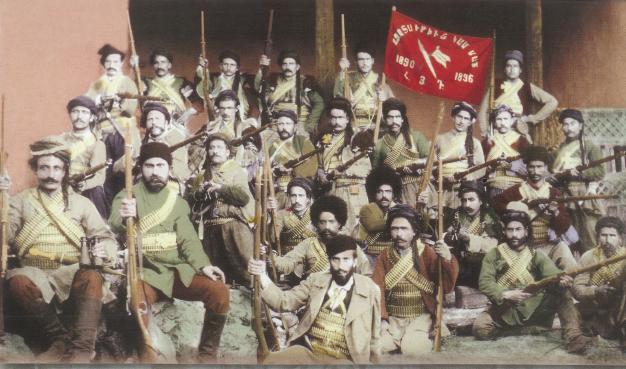
Fedayees of the Dashnaktsutyun Party under the banner "Freedom or Death." Late 19th—early 20th century.
In 1893, after the Russian-French alliance was officially established, a wave of Armenian uprisings swept across the Ottoman Empire, and a large-scale guerrilla movement emerged. Those who led the revolts chose the localities at the intersection of the Russian and French zones of influence. The activists, weapons, and money came from Russia. Many of the commanders were Russian Armenians. Graduates of military academies and ex-servicemen of the Russian army stood out among them (just like in the Donbas in 2014–2021). The fierce confrontation with the Turks and the Kurds continued until the spring of 1904.
The Spread of the Armenian-Turkic Confrontation to the Caucasus
The Russo-Turkish war and the ensuing multi-year Armenian-Turkish confrontation once again caused an influx of tens of thousands of Armenians from the Ottoman empire to the Caucasus. Most of them settled in the Erivan Governorate near the border. As a result, the share of Armenians among its population exceeded 50%.
At the same time, systemic discrimination against the Turkic population continued. A striking example is the establishment of the municipal parliament of Erivan in 1879. The authorities limited the percentage of non-Christian members. Although the Turkic residents remained the largest ethnic group in the city, only 18 representatives of this ethnic group were elected to the local parliament, along with 38 Armenians. This became especially significant quite soon, after the right to appoint the head of the executive authority was transferred to the parliament. In all subsequent years, only Armenians held leadership posts in the municipal government, which gave them access to budget allocations. At the same time, the dominance of the Armenians in the economy of the Erivan Governorate and the entire South Caucasus continued to grow. Strong positions in power structures, huge financial resources, and a constant inflow of immigrants from Turkey contributed to the spread of nationalist sentiments in the Armenian community.
In 1901, a law on “registering up to 75,000 refugees from Turkey in the cities of Transcaucasia” was enacted. A few years later, a new chief of the regional colonial administration recognized that “half of these 75,000 Armenian refugees were young thugs hardened in the civil war with Turkey and closely united by Dashnaktsutyun.”
It was only in 1903 that the authorities of the Russian Empire suddenly came to their senses and tried to control the development of Armenian nationalism. For this purpose, they decided to confiscate the property of the Gregorian Church and establish control over the Armenian school network. The Dashnaktsutyun party took advantage of the widespread discontent in the community and became a dominant force among the Armenians in the Caucasus (it achieved the same status in Turkey in the 1890s).
A year and a half later, as leftist uprisings erupted throughout the Russian Empire, the Dashnaks attempted to take the lead among anti-government organizations in the Caucasus. To achieve this ambition, Dashnaktsutyun intended to involve the Turkic people living in the Caucasus in the struggle against the authorities under its leadership. But because they suffered from the economic domination of the Armenians, they did not welcome this idea. The Dashnaks turned to threats. Conflicts ensued.
Against this background, the first mass Armenian-Turkic clashes began in South Caucasus in February 1905 and lasted until July 1906. According to various estimates, the death toll ranged from 3,100 to 10,000 people. The Erivan Governorate was one of the epicenters. “Dashnak” guerrilla detachments transferred from Turkey became the main assault force. They brought ruthless tactics of armed confrontation to the Caucasus. Their purpose was to “cleanse” the territories of the Turkic population and create mono-ethnic Armenian enclaves. This is how ground for the future establishment of “autonomous Armenia” was laid. For the first time, thousands of Turkic people were expelled from their lands. Mass expulsions of the greatest scale took place in Zangezur and Karabakh.
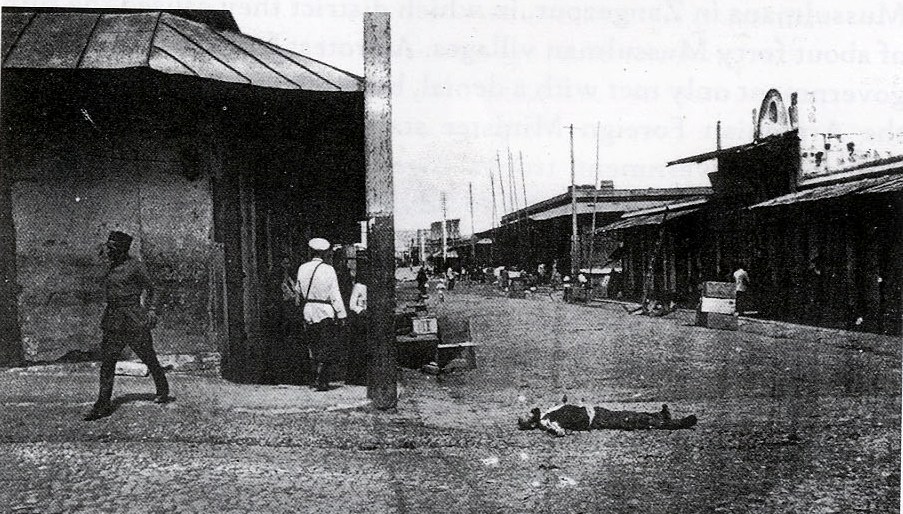
Baku during the Armenian-Turkic clashes of 1905.
Dashnaktsutyun had its own armed forces, arms shops, and even its own prisons in the Caucasus. The local security forces were weak, and the chief of the regional administration preferred to negotiate with the Dashnaks to put an end to the interethnic clashes.
One more year later, escalation of tensions between Russia and Turkey began again. The Russian leadership placed its hopes on an alliance with Dashnaktsutyun, and the party received support from the government.
The Catastrophe of the Turkic Civilization
In September 1914, Dashnaks began forming Armenian units in the Russian Army. During World War I, the number of Armenians in the Russian forces on the Caucasus front reached 80,000.
With the advance of the Russian army in eastern Turkey in April 1915, a mass uprising broke out in regions with the Armenian population. It was organized by Dashnaktsutyun, which coordinated its actions with and received support from the Russian command. The Ottoman authorities responded by expelling Armenians from the regions bordering on Russia. This expulsion was accompanied by brutal repression. An exodus of Armenians from the Ottoman empire to the Erivan Governorate—the closest to the border—began. Three years later, the number of migrants there reached 600,000. They vented their anger and desire for vengeance on the Turkic residents of Erivan and Zangezur. Large groups of armed Turkish Armenians attacked their villages, killed and drove out the locals.
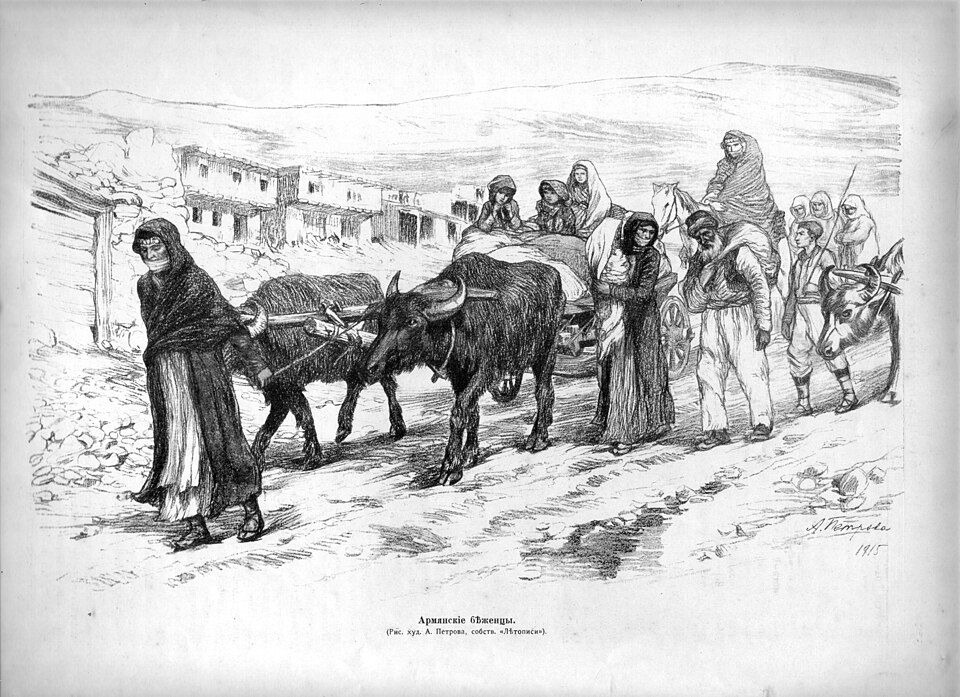
Armenian refugees, 1915 by A. Petrovа.
These atrocities became possible because of the collapse of the Russian Empire in 1917. As the entire Caucasus plunged into chaos and anarchy, the leadership of Dashnaktsutyun took advantage of the situation. It controlled Armenian armed forces dispersed between Baku, the Tiflis and Erivan governorates, numbering about 50,000. They consisted of former servicemen of the disintegrated Russian Army and guerrilla units made up of Ottoman Armenians.
With the largest and the most combat-ready national units in the entire South Caucasus, Dashnaks sought to secure a dominant position in the region in the first half of 1918. They established military dictatorship in Erivan, launching a campaign for extermination and expulsion of Muslims from the city and surrounding villages. Then, in alliance with Armenian Bolsheviks, Dashnaks consolidated their authority in Baku and massacred the Turkic population there. From Baku, Dashnak troops marched on Tiflis. However, they were defeated by the Turkish army that had crossed the recent front line.
Dashnaktsutyun never took Tiflis or Baku. They had to settle for provincial Erivan. It held little appeal to the Armenian political elite. Until the failure of the Tiflis campaign, it had only been valuable for Dashnaks because Erivan and the surrounding areas served as a military hub with huge weapons arsenals. This was the legacy of the collapsed Russian Army, which had used the Erivan region as a frontier outpost against Turkey for almost a century.
This is how the first Republic of Armenia emerged in 1918. Its territory included the lands of the Erivan Governorate; the Kars region captured during the Russo-Turkish War of 1877–1878; the occupied part of southern Georgia; and Zangezur. The latter was part of the Erivan Governorate for only a few years in the 19th century. During the remainder of Russian rule, Zangezur was part of the Elisavetpol Governorate, which, along with the Baku Governorate, later formed the territorial basis for the Azerbaijan Democratic Republic. In 1915, Turkic population still comprised more than half of residents of Zangezur.
Power in these regions was now monopolized by the nationalist party. Almost all members of the leadership of the self-proclaimed republic were born outside its territory. The majority of local Armenians and recent migrants from Turkey viewed this government unfavorably. That is why Dashnaks relied on dictatorship, militarism (85% of the state budget was spent on military needs), and rabid nationalism. An Armenian witness of the events writes,«Державна політика полягала в очищенні території від мусульман…», – зазначав вірменський сучасник тих подій. Вірменський історик наголошує: влада“The state policy consisted in removing Muslims from the territory…”.An Armenian historian emphasizes that the authorities“pursued a ’scorched-earth‘ policy—robbery, rape, murder, and all kinds of atrocities knew no bounds and manifested in all their ugliness” (see footnotes to the sources quoted in the book). “Your three leaders… are gang leaders that are destroying Tatar villages and organizing massacres in Zangezur…”, the British Foreign Secretary said, sharply criticizing the Speaker of the Armenian Parliament.
Military commanders, soldiers, state officials, and ordinary citizens “became mired in a cycle of robbery and rape and were unable to escape it, so in the end Armenia’s independence sank with them,” concluded the then head of Armenia’s Immigration Department.
According to an Armenian researcher who studied the documents of the State Archive in Yerevan, within two and a half years, Dashnaks exterminated “60% of the Azerbaijani population” (more than 253,000 people) in territories under their control.[16] As a British periodical reported in 1920, “about 150,000 Muslim refugees whose villages in Armenia were destroyed” were in Azerbaijan, and many more fled to Turkey and Persia. As a result of extermination and mass expulsion, the number of Turkic residents in Armenia decreased by 77%. Two decades later, the main executors of this state policy actively shared their experience and collaborated with the Nazis.[17]
As a result of the systemic expulsion of the Turkic population and mass resettlement of Armenians from other countries in 1828–1917, as well as the draconian policy pursued by Dashnaks in 1918–1920, soon after the establishment of Soviet power in Armenia, Armenians comprised 84.6% of the population of the Republic, while Turkic residents, who soon afterward became known under the ethnonym of “Azerbaijanis”, accounted for just 8.8%.
Stalin’s Population Transfer
In the first years of the communist regime, the inflow of Armenians from abroad resumed. In 1926–1932, about 75,000 Armenian resettlers arrived in Soviet Armenia.
“A significant proportion of Armenians living in Armenia are in fact not owners but rather tenants: they have come to this country from all parts of the world and colonized it,” an Armenian writer remarked in 1927. “We should be grateful to the Bolsheviks… If they did not save the inherited cause, they at least brought it onto a more stable course,” the prime minister of the first “Dashnak” government said.
In 1935, the replacement of historical Turkic names of settlements and natural sites with Armenian names began (60% of toponyms were renamed until 1988). At the same time, the ancient Turkic-Muslim character of Erivan was destroyed. The city was rebuilt as a purely Armenian national center. In 1936, its historical name was changed to the Armenianized name—“Yerevan.”
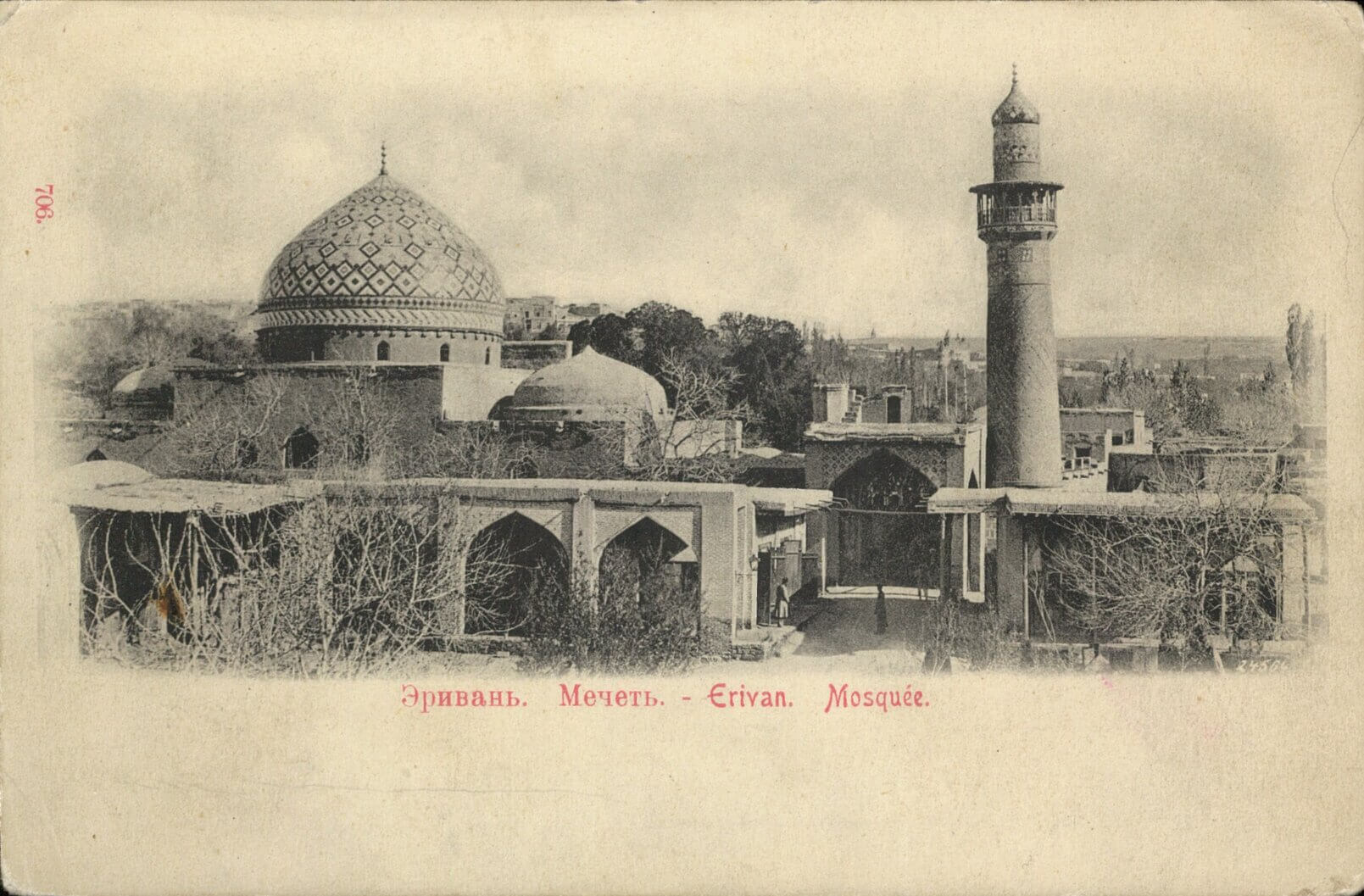
Erivan, Mosque
On the remains of 253,000 Turkic residents of Erivan and Zangezur tortured to death by Dashnaks, on the ruins of their burnt villages, the Soviet authorities built a new identity for the grandchildren and children of Armenian resettlers of the 19th century and the immigrants of the first decades of the 20th century.
After World War II, Stalin gave orders to resume mass migration. In 1946–1948, about 100,000 Armenians from Europe and the Middle East arrived in Soviet Armenia. In order to make room for them in their new homeland, the Soviet authorities deported 150,000 Azerbaijanis in 1948–1950.
Many of them begged to be allowed to stay in their ancestral land. People were forcibly evicted from their homes, and sometimes Syrian or Iranian Armenians moved into their houses even before their departure. The deportees were transported in freight cars like cattle. Because of the terrible transportation conditions and housing quality at destination, many died of malaria and other diseases. They hardly received any medical care. Deportation was escalating into extermination.
At the same time, the destruction of material traces of the centuries-old presence of the Turkic civilization began in Soviet Armenia. Cemeteries, the few still-standing mosques, and medieval fortresses and castles with inscriptions containing names of historical Turkic rulers were all destroyed.

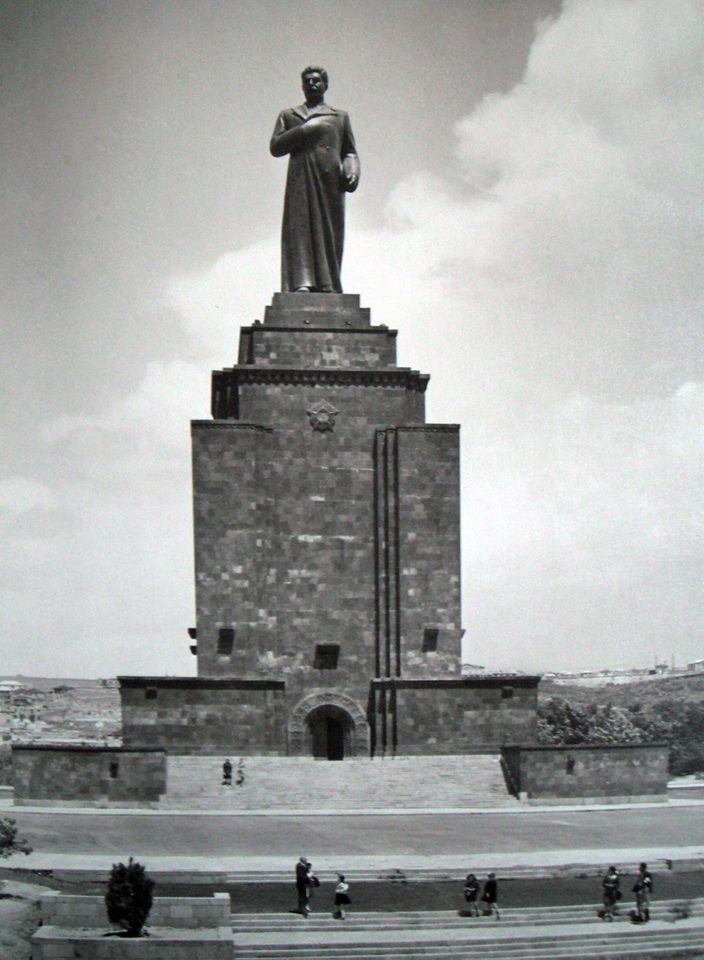
Josef Stalin monument in Yerevan. Mid-20th century.
The Final Catastrophe
A total of 100,000 Armenians arrived in the republic from other countries through Stalin’s efforts and, unlike their local peers, they had a much more pronounced nationalist mentality. Before resettlement, many participated in the activities of the Dashnaktsutyun party. After their resettlement, they exerted ideological influence on the local Armenians. This is how the preconditions for the renaissance of nationalist sentiments in Armenia in the 1960s were created and the foundation for the mass nationalist movement in the republic was laid.
The founders of this movement that emerged in 1985–1987 included members of the Armenian intelligentsia, government officials, and mid-ranking Communist Party functionaries in Yerevan and the Nagorno-Karabakh Autonomous Region (NKAO) of the Azerbaijan SSR. They took advantage of the crisis in the USSR and the incompetent reforms of the country’s new leadership. These activists sought to reshape Armenian nationalism in order to mobilize the masses and ultimately rise to power. To generate resonance, intensify national sentiment, and consolidate Armenians under their leadership, the new leaders deliberately escalated interethnic tensions.
After the first nationalist demonstrations in Yerevan, November 1987 saw clashes between Armenians and local Azerbaijanis in Zangezur. Azerbaijani refugees from the region fled to Baku. In February 1988, the outflow of Azerbaijanis from Zangezur turned into an exodus. Expulsion of Azerbaijani population from other regions of Armenia began. Their villages were blockaded, deliveries of food were stopped, and armed attacks were carried out. The attackers, among whom Armenian migrants from Syria stood out, set houses on fire, beat or killed local residents. Buses carrying refugees were fired upon with automatic weapons. In September, interethnic clashes spread across the republic. Most of those killed were Azerbaijanis. Survivors fled en masse to Georgia and Azerbaijan. Children and women died while making their way across the snow-covered mountains.
In early 1989, more than 200 villages recently inhabited by indigenous Azerbaijanis were abandoned. All of them left Armenia. Just a year before, the number of Azerbaijanis in the republic was estimated to be between 200,000 and 250,000. The centuries-old Turkic civilization of Erivan and Zangezur “disappeared” completely.
Epilogue: The Way Forward
In 1913, Illarion Vorontsov-Dashkov, chief of the colonial administration, wrote as follows, clearly justifying the indispensability of Russia’s presence in this region,

“…all the nationalities of the Caucasus are hostile to each other; they tolerate their co-existence only under the authority of the Russian government and would have already plunged into bloody rivalry without it.”
One of the Zionist leaders of Baku, Abraham Weinshel, who attempted to act as a mediator and peacemaker during the Armenian-Turkic massacre of 1905, later recalled,

“There is ample reason to believe that this confrontation was instigated by malicious provocation on the part of the local authorities, who intended, by sowing discord among large portions of the population, to weaken the developing liberation movement…”
Judicial investigator Kuzminsky, who investigated the causes of the first Armenian-Turkic massacre of 1905 immediately afterward, wrote in his report,
“The Armenian Revolutionary Committee [Dashnaktsutyun]… attempted to mobilize the Muslim portion of the population. For this purpose, in 1904, proclamations from an “Armenian organization” were disseminated in Baku inviting Muslims to unite with Armenians for joint actions against the [Russian] government.
A Baku correspondent of the newspaper Novoe Vremya that was circulated across the Russian Empire added that the same “Armenian committee” emphasized, addressing the Muslims, “both tribes have always lived in friendship…, we need to break free from the Russian tutelage and to shake off this power…”
After the first interethnic clashes in Baku, the first national political group that included members of Turkic population in the Caucasus was formed in the city of Ganja in the north-west of what is now Azerbaijan. On February 14, 1905, it issued a proclamation entitled,
The authors of the proclamation accused the colonial authorities of orchestrating the Armenian-Turkic massacre and called on all peoples of the Caucasus to jointly turn their weapons against the true common enemy.
120 years ago, the Armenians and the Turkic peoples failed to agree on a common strategy. Ethnic clashes erupted immediately after the very idea was conceived. They were the reason why the attention of the politically active members of both ethnic groups became focused on mutual confrontation. Perhaps now, after the historic ceremony in Washington in the presence of the leaders of Azerbaijan and Armenia, the situation will change…