About the book

An Action-Packed Spy Thriller—The Story Behind the Book
Undercover trips to Armenia, detentions and interrogations, an FSB pre-trial detention center, “expropriation” from a high-ranking official, and a miraculous disappearance in one of Yerevan’s most restricted archives. Eight countries, dozens of participants, and thousands of sources. This is how this book was prepared. As a result, we have new perspectives on the history of Moscow’s regional expansion, a comprehensive picture of the most dramatic stages of a perished civilization’s past, extensive photo and video evidence from hard-to-reach mountainous areas, and some fifty interviews with the last surviving eyewitnesses.
How the Book Was Made and How Long It Took
The collection of materials began in 2021, a few months after the Second Karabakh War. Since the archives, material artifacts, and the few remaining witnesses who could shed light on the matters relevant to this research are spread across a vast geographic area, we sought help from many people in eight countries. Over four years, more than fifty individuals responded to our requests. We managed to recruit most of them to assist with our cause. They agreed to take part in gathering materials for the final chapters of the history of a unique civilization that until now has not received a comprehensive coverage in literature. Among our like-minded supporters were professional historians, archivists, librarians, and bloggers in Armenia, Georgia, Azerbaijan, Russia, Ukraine, Kazakhstan, Poland, and Israel. Immense help was provided by the children and grandchildren of the last remaining members of the perished Turkic civilization of the Erivan Province and Zangezur.
The work was primarily carried out in archives and “in the field”. Most of the authentic materials were collected in the Central State Historical Archive of Georgia. We express our special gratitude to its staff for their responsiveness and assistance. At the same time, we conducted research in the Russian State Military History Archive (RGVIA), the Russian State Archive of Socio-Political History (RGASPI) and the State Archive of the Republic of Azerbaijan that also proved very successful. Some interesting and previously unpublished materials were obtained from the archives of the Jabotinsky Institute in Tel Aviv. These included memoirs and autobiographies of the Zionist movement activists who lived in Baku and Tiflis during the first two decades of the 20th century, and who witnessed and sometimes even participated in those historical events.
Gathering materials in Russia was especially challenging due to the stringent limitations on access to and heightened oversight of archives in Moscow. After a long ordeal, we were able to circumvent this obstacle with the help of two “officially recognized” Russian historians—to whom we owe our great thanks!
The most dramatic part of the work took place in Armenia. There, we set ourselves two tasks: to photograph and record on video as many preserved heritage sites of the Turkic civilization of Erivan province and Zangezur as possible and to record interviews with the surviving witnesses of the events that happened in the 1930s–1960s. However, due to the sensitive nature of the research topic, we encountered enormous difficulties. Armenian security services proved even more vigilant than those in Russia (though it seemed hardly possible). They are very quick to respond to any sign of interest for the Turkic past of their country. We had to conceal the subject of our interest as much as we could. At first, this helped, but after just a few months, the local “chekists” figured out what we were up to. It was especially difficult to photograph and film semi-ruined old Turkic cemeteries and ruins of mosques in the mountainous rural areas. The locals all know each other; they immediately identify any foreigners and promptly inform district security officers.
In the end, we had to give up attempts to conduct interviews but continued filming historical sites despite all the obstacles. Like-minded people from various countries, who traveled to Armenia’s remote areas under the guise of tourists, provided tremendous help in this endeavor. Dozens of them were detained and subsequently deported from the country. All photographic and video materials were confiscated. During interrogations, Armenian investigators repeatedly pushed the detained foreigners to testify that they cooperated with the intelligence services of Turkey, Azerbaijan, or Israel, though we wish to stress that all photographs and videos were taken exclusively at Turkic historical sites, often in remote mountainous areas, far from any military bases or strategic facilities.
It was the Isaev brothers, citizens of the Russian Federation, who found themselves in a particularly difficult situation on our account. First, they were detained in Armenia, and then they were deported to Russia. They returned there without any trouble, but a few days later, in September 2024, they were detained again by officers of the FSB (the Federal Security Service of the Russian Federation) in Sochi. After two weeks of interrogations, the brothers were released, but as they were leaving the pre-trial detention center, they were detained again for ten more days. This time, they were “handled” by investigators from Lubyanka (the FSB headquarters in Moscow), who came to Sochi specifically for this purpose. They demonstrated remarkable knowledge of the Isayevs’ past and their close circle. Later, we found out that an acquaintance of theirs had also been detained. At our request, he had been visiting antique stores in Moscow and Saint Petersburg in search of late 19th – early 20th century postcards that showed mosques and hammams of the Erivan Governorate. Whey they failed to elicit a confession from the brothers as to which “enemy” intelligence service they worked for and whose assignment they were carrying out in Armenia, the authorities released them. However, it was made clear that they would remain under close surveillance.
The hunt for written sources of interest to us in Armenia was even more “movie-like”. Once again, we were not after any state secrets. We were solely interested in history. However, that did not make our task any easier. It was not only the “sensitive” nature of the subject itself but also the extreme inaccessibility of some materials that made our work challenging. For example, some of the academic publications we managed to buy in Yerevan or borrow from local libraries contained intriguing references to a book with information on Zangezur, A History of Armenia’s Railroads (in Russian) by Ruben Grdzelyan, Press Secretary of South Caucasus Railroad, or occasionally referenced a publication that was of an even greater interest to us, Interethnic Clashes in the Yerevan Governorate in 1918 («Ազգամիջյան կռիվները Երևանի նահանգում 1918թ.» in Armenian) by the late Doctor of History Eduard Zograbyan, former Head of the International Relations Department at Yerevan State University. Both books were published in Yerevan – the former in 2023 and the latter in 2000. One would think that, since both scholarly works were written by well-known people and published relatively recently, there should be no difficulty obtaining them.
However, we found out that their print run was extremely small. In both cases, the number of copies was not indicated, contrary to usual practice. We searched in bookstores, in antique and second-hand stores, and in libraries in Yerevan and provincial towns but they were nowhere to be found.
After many months of adventures that any spy thriller screenwriter in Hollywood would envy, we managed to “borrow” Grdzelyan’s book from a very important South Caucasus Railway official (without the knowledge of its lucky owner). Obtaining Zograbyan’s work was an even greater challenge. After a lengthy search, we learned that a unique copy with a dedicatory inscription by the author himself was kept in a limited access collection that was part of a special depository at the Fundamental Scientific Library of the National Academy of Sciences of Armenia (ՀՀ ԳԱԱ հիմնարար գիտական գրադարան). A photo is attached. Усі спроби легально отримати доступ до цієї книги завершилися повним провалом. All attempts to access this book by legal means ended in a complete failure. Well, we sincerely apologize to the highly respected academic institution! We had to pull off a James Bond-style operation to “borrow” the book by the late Dr. Zograbyan as well without being noticed. You can find numerous references to this source in chapters of our work. We promise to try to return this book to its original place of storage in the same miraculous way soon.
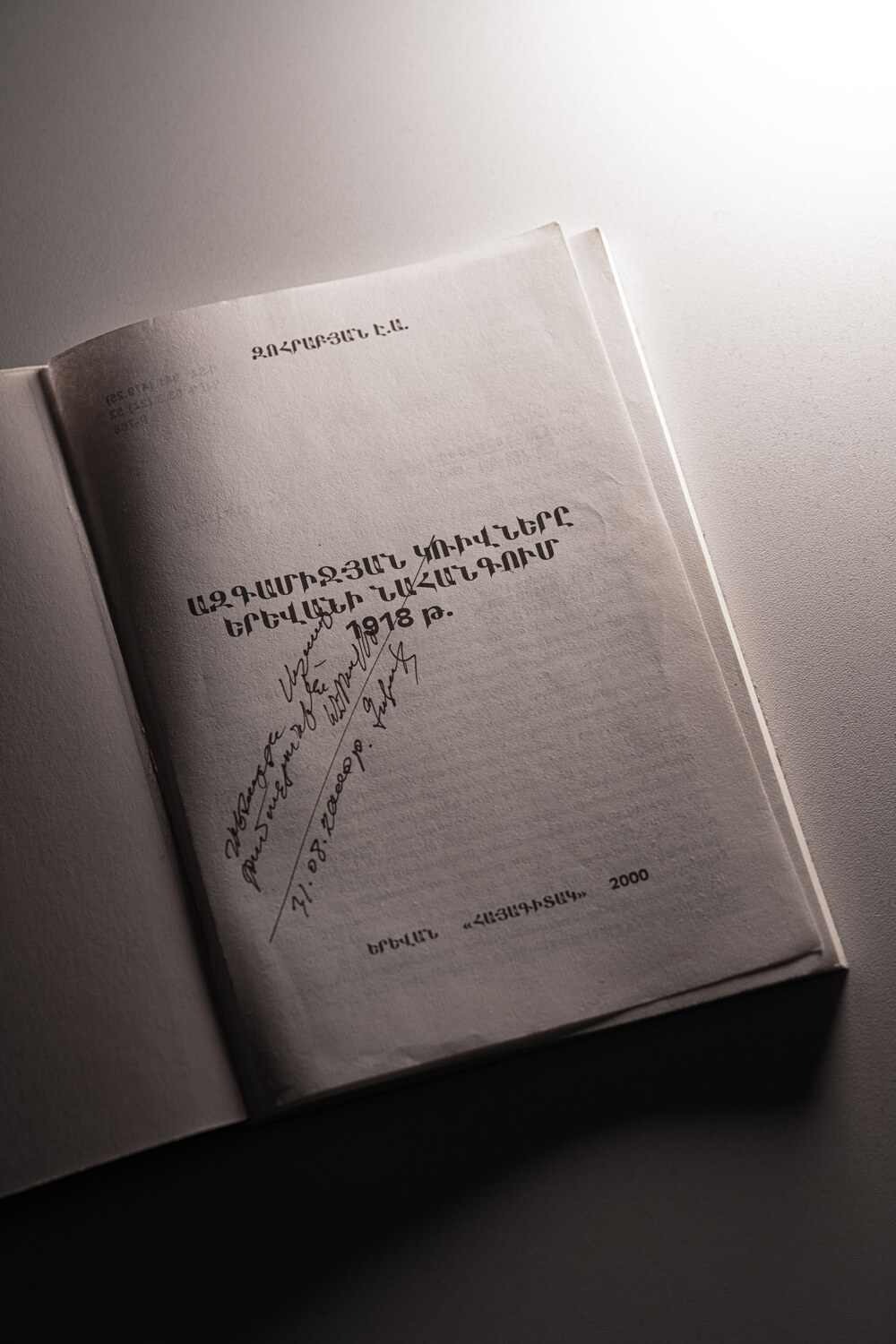
Interethnic Clashes in the Yerevan Governorate in 1918, by Dr. E. Zograbyan
What Makes the Book Unique
In terms of geopolitics, the book sheds a new light on many historical events and processes that have shaped today's ethnic and political map not only of South Caucasus but also Eastern Europe and Central Asia. In the context of the former Turkic ethno-cultural space, the book demonstrates how Moscow established its dominance in Eurasia and built its imperial ideology of expansion. Then it describes the advancement of Moscow’s great-power ambitions in the Muslim East. Finally, at the regional level, the book highlights how these developments affected the fate of Armenians and Turkic peoples of the Caucasus, specifically in the Erivan province and Zangezur. Drawing on thousands of sources, the book pieces together a clear panoramic view of the causal relationships between events that determined the current balance of power in South Caucasus, focusing specifically on the root causes and the less visible drivers of the Armenian–Turkic confrontation, with an emphasis on its manifestations within the territory of today’s Armenia.
The resulting picture differs significantly from the official interpretation of history by the countries of the region and Russia. This new representation neither advances a conspiracy theory nor adds to the existing body of revisionist hypotheses. We only used “conventional” sources (detailed below) when writing this book. Our motivation is different: for obvious reasons, historical narratives in Russia, Armenia, and Azerbaijan are led by state ideology and the prevailing political climate. That is why many sensitive matters are left “off camera”.
The more comprehensive new perspective presented in the book is particularly relevant given the prospects of normalization of Armenia – Azerbaijan and Armenia – Turkey normalization, the war in Ukraine, and the escalation of Russia’s confrontation with the West, including in South Caucasus.
It should be noted that the new approach to examining the root causes of the current situation in Eurasia used in this book was, to a great extent, inspired by the innovative works by Sultan Akimbekov, a prominent contemporary Kazakhstani historian. He takes a robust approach to his research and presents his findings in a clear and accessible way.
As for our book, it is important to note that its uniqueness is primarily found in its focus on the local dimension. It is an attempt to tell a coherent story of the final stages in the history of a particular subethnic group of Turkic peoples in the Caucasus without using Azerbaijani and Turkish sources. In our attempt to reconstruct the past of the Turkic civilization of Erivan province and Zangezur we primarily rely on Armenian, French, and Russian sources, as well as the firsthand experiences voiced by the Turkic residents of Erivan and Zangezur.
However, this is not the only aspect that makes the book unique. Academic works on the Turkic aspects of the Erivan province and Zangezur published in Azerbaijan in Azerbaijani and Russian since the 1990s mainly focused on isolated fragments. We have not found any Azerbaijani research works that attempted to provide a comprehensive account of the history of the Turkic peoples of these regions, at least for the period from the beginning of Russian occupation in 1801–1827 until 1988. Moreover, some Azerbaijani historians who wrote on these subjects approached the matter quite frivolously. They seldom cited information sources. Where they did, the original source either lacks the information “reproduced” by the author or the author interpreted it too creatively, as the check reveals. Furthermore, the tone is often very emotional and even overtly biased, which is suitable for propagandist journalism but inappropriate in academic research. There are even more egregious cases where the compilers of such “scholarly” works simply invented history (a typical example is analyzed in the Ethnography section of this book, see the chapter “The Non-Armenian Name of the Capital and the River from Turkic Mythology”). It is unclear why they do this while archival documents, eyewitnesses’ memoirs, and works by Armenian historians contain plentiful authentic information on the subject of interest.
However, to be fair, we must also note some valuable works on specific aspects of the history of the Turkic peoples of Erivan province and Zangezur. Thus, the work by one of Azerbaijan’s leading contemporary historians, Solmaz Rustamova-Togidi, Karabakh-Zangezur.1918. Azerbaijani Pogroms in Documents (Baku, 2023, Rus.) stands out as a documentary and relatively impartial one. The reissued fundamental study by the late Sitara Mirmakhmudova is also of great value. The author was born in Erivan and conducted field research in Armenia in the 1980s. Her book is entitled Azerbaijani Placenames in Armenia and the Policy of their Armenization (Baku, 2015, Rus.). It is also worth mentioning the monumental work by the Academy of Sciences in Russian and English, The Irevan Khanate: The Russian Occupation and the Relocation of Armenians to the Lands of North Azerbaijan (Baku, 2010), and the book by Ziyad Amrakhov İrəvan quberniyasının tarixi: 1850–1917-ci illər (History of the Irevan Governorate 1850–1917, Baku, 2022, in Azerbaijani). Unfortunately, we could not use evidence from these sources due to our own decision not to rely on materials by Azerbaijani historians. Had it not been for this “deliberate avoidance,” we would likely have been able to cover some aspects more fully. However, we would not have achieved our key unique goal to recount the history of the Turkic peoples of Erivan and Zangezur primarily from the perspective of Armenian, French, Russian, and Soviet sources.
We have not found any studies specifically devoted to the history of the Turkic peoples of Erivan and Zangezur outside of Azerbaijan, in particular in Armenia, Russia, and Western countries. Some aspects of their past are touched upon fragmentarily in works on the history of South Caucasus, particularly Armenia and the Armenian-Azerbaijani conflict.
Thus, this book is the first attempt of its kind to present, without using Azerbaijani and Turkish sources, a coherent history of one of the subethnic groups of Turkic peoples of the Caucasus during its final, most dramatic stage – in the 19th – 20th centuries.
Sources Used
A total of 1765 sources were used to write this book. The resulting text is not so much a narration by the author as it is a compilation of quotes from these sources. Using this approach, we can hear the authentic voices of participants and eyewitnesses of the historical events described here. This is all the more important because many of the cited authors are usually overlooked by contemporary researchers.
Memoirs by prominent figures of the Armenian national movement of the late 19th and early 20th centuries make up a special category of sources. Much information was drawn from works by Armenian eyewitnesses to the events under consideration, writings by Armenian authors, and works by notable Armenian historians. Some of those were published in Russian and English, but many only exist in Armenian, and so far, they have not been covered in studies in other languages.
Another significant body of sources is made up of Russian chronicles, writings by European missionaries and travelers, and documents and memoirs drawn up by French, Russian, and Soviet officials, statesmen, and political figures. Writings and memoirs by leaders of the Democratic Republic of Georgia (1918–1921) did not escape our attention either. All of the numerous sources covering a vast period from the 14th century until the end of the 20th century make it possible to view past events through the eyes of participants and witnesses without subsequent interpretations by interested parties.
Extensive use was made of excerpts from American, British, all-Russian, and Caucasian newspapers published in the 20th century, especially in the first two decades.
Nearly fifty of the last remaining representatives of the Turkic civilization of Erivan and Zangezur were interviewed. All of the interviews were recorded on video in Azerbaijan, Georgia, and Turkey between 2023 and 2025. Some of the respondents had already passed away by the time the book was published. Their invaluable recollections echo the documentary sources, often enriching them with details, personal impressions and experiences. Remarkably, the older the respondents were, the more fully and accurately their accounts matched the documents from the period in question.
What You Will Not Find in the Book
- A detailed coverage of the history of Russia’s Eastern policy in the 16th–19th centuries;
- A general chronicle of South Caucasus and Anatolia. Accordingly, there are no separate comprehensive descriptions of the past of Armenia or Azerbaijan, Turkey or Iran;
- A timeline of the formation and development of national movements of the Armenian people and Turkic peoples living in the Caucasus;
- A consistent coverage of the tragic chapters in the history of the Armenian people.
All of the above serves as a background for the central subject of the book—the final and most dramatic stages in the existence of the Turkic civilization of the Erivan province and Zangezur. Readers wishing to explore the “background” subjects listed above in more depth are encouraged to consult specialized literature, including the titles listed in the references section.
What Comes Next
During the preparation of this book, thousands of photographs and video recordings of historic Turkic sites in the territory of the Republic of Armenia were made. Visual materials have been collected for more than 600 preserved and ruined villages where Turkic population once lived. Numerous photographs and videos document the miraculously preserved and long-abandoned Muslim cemeteries in remote mountainous areas. Many tombstones still bear inscriptions in Arabic script and Azerbaijani Cyrillic. There is a wealth of material capturing the present state of half-ruined mosques, public, administrative structures, and fortifications built by Turkic rulers of these territories. In some places, inscriptions in Arabic have survived, indicating the time of construction of a particular monument as well as the names of its architects or medieval rulers.
Only a small portion of these materials have been included in the book. Since 2024, several like-minded friends have been systematizing the other photographs and especially videos and adding historical annotations. All of them are grandchildren of the last remaining members of the perished Turkic civilization of the Erivan province and Zangezur. In the foreseeable future, we plan to publish these materials online gradually.